Boost Your Writing Speed: Mastering the Art of Faster Writing
Are you tired of spending hours on a single writing task, watching your deadlines slip away, and feeling like you're not producing content as quickly as you should? You're not alone. Many writers struggle with writing speed, but the good news is that it's a skill that can be developed with practice, patience, and the right strategies. In this tutorial, we'll show you how to get faster at writing, providing you with actionable tips and techniques to help you boost your writing speed and productivity. By the end of this tutorial, you'll have the tools and confidence to tackle any writing task with ease and efficiency.
Step 1: Setting Your Writing Environment for Faster Writing
To write faster, you need to create an environment that fosters productivity and minimizes distractions. This means setting up a dedicated writing space that is comfortable, quiet, and free from interruptions. Consider investing in a good chair, a large desk, and a computer with a large screen. Remove any clutter or distractions from your workspace, and make sure you have all the necessary tools and resources within easy reach. For example, you can use a noise-cancelling headphone or play calming music in the background to help you focus. 
Step 2: Developing a Writing Routine for Faster Writing Speed
Establishing a writing routine is crucial to increasing your writing speed. This means setting aside a specific time each day or week to write, and sticking to it. Start by setting realistic goals, such as writing for 30 minutes a day or 1 hour a week. As you get into the habit, you can gradually increase the duration and frequency of your writing sessions. It's also essential to create a pre-writing routine that signals to your brain that it's time to write. This could be as simple as making a cup of coffee, doing some stretching exercises, or reading a motivational quote. 
Step 3: Warm-Up Exercises to Get You Writing Faster
Before you start writing, it's essential to warm up your writing muscles. This can be done by doing some simple writing exercises, such as freewriting, journaling, or writing prompts. Freewriting involves writing whatever comes to mind without stopping or worrying about grammar or spelling. Journaling involves writing about your thoughts, feelings, and experiences. Writing prompts can be found online or created by yourself, and they provide a starting point for your writing. These exercises help loosen up your writing muscles, get your creative juices flowing, and prepare you for the writing task ahead. For example, you can write about your favorite childhood memory, a recent event, or a topic that interests you. 
Step 4: Outlining and Planning for Faster Writing
Outlining and planning are essential steps in the writing process that can help you write faster. By creating an outline, you can break down your writing task into smaller, manageable chunks, and organize your thoughts and ideas in a logical and coherent manner. This helps you stay focused, avoid writer's block, and produce content that is well-structured and easy to follow. Start by brainstorming ideas, identifying your main points, and creating a rough outline. Then, expand on each point, adding more details and supporting evidence. Use headings, subheadings, and bullet points to make your outline clear and concise. 
Step 5: Writing in Sprints for Maximum Speed
Writing in sprints involves writing in short, focused intervals, typically 25-30 minutes, followed by a short break. This technique is called the Pomodoro Technique, and it can help you stay focused, avoid burnout, and increase your writing speed. During each sprint, eliminate all distractions, turn off your phone, and write as much as you can. Don't worry about grammar, spelling, or sentence structure. Just focus on getting your ideas down on paper. After each sprint, take a short break to stretch, move around, or do something relaxing. This helps you recharge and come back to your writing task with renewed energy and focus. 
Step 6: Editing and Revising for Faster Writing
Editing and revising are essential steps in the writing process that can help you refine your content, eliminate errors, and improve your writing speed. However, it's essential to separate editing and revising from the writing process. Try to avoid editing or revising as you write, as this can slow you down and make the writing process more laborious. Instead, complete your first draft, then take a break before revisiting your work. Use this opportunity to review your content, make revisions, and edit your work. Look for ways to improve sentence structure, grammar, and clarity, and make sure your content is well-organized and easy to follow. 
Frequently Asked Questions
Q: How long does it take to see improvement in writing speed?
A: The amount of time it takes to see improvement in writing speed varies from person to person. However, with consistent practice and patience, you can start to see improvement in a few weeks or months.
Q: What is the best way to overcome writer's block?
A: The best way to overcome writer's block is to take a break, do something relaxing, and come back to your writing task with a fresh perspective. You can also try changing your environment, talking to someone, or doing some warm-up exercises to get your creative juices flowing.
Q: Can writing speed be improved with practice?
A: Yes, writing speed can be improved with practice. The more you write, the faster and more efficient you become. Consistent practice helps develop your writing muscles, increases your vocabulary, and improves your writing skills.
#1 Secret To Writing Faster

#1 Secret to Writing Faster
Write Faster Writing Tips For Authors – Artofit

Write faster writing tips for authors – Artofit
Should You Be Writing Faster?
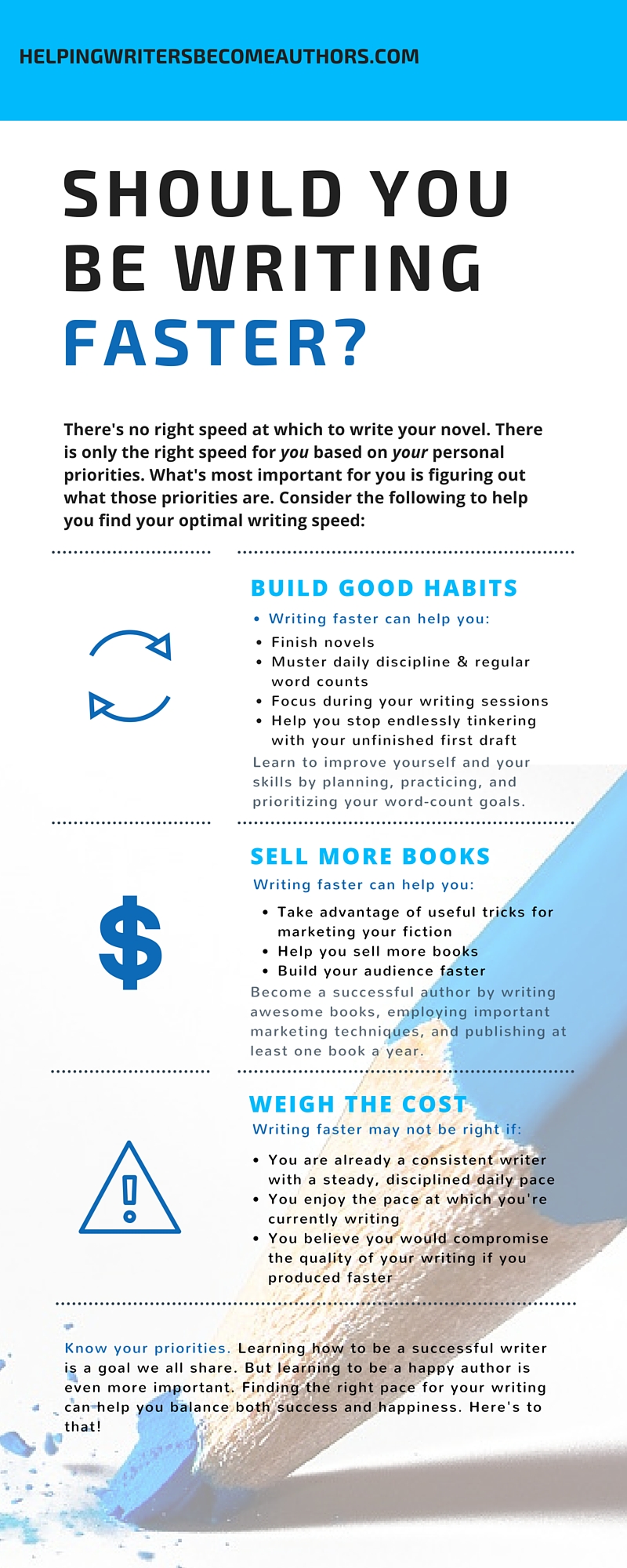
Should You Be Writing Faster?